Travel & Adventure
How to Fly With a Car Seat Without Losing Your Mind
From booking to baggage claim: a calmer plan for the seat, the kid, and everything else you are carrying.
Flying with kids is already a small logistical miracle. You are moving people, bags, snacks, electronics, stuffed animals, documents, maybe a stroller, and at least one child who will suddenly announce that they need to use the bathroom the moment boarding begins.
Now add a car seat.
The first time you do it, the questions multiply quickly. Can you use the seat on the plane? Should you check it instead? Is it going to fit? Does your kid need their own ticket? Where does the seat go? What happens when you land? And why does something designed to keep a small child safely in one place somehow become the largest object you own the second you walk into an airport?
The easiest way to simplify all of this is to make one decision before you leave home:
Are you using the car seat on the airplane, or are you just trying to get it to the destination?
Those are two different problems, and trying to solve both at the check-in counter is how vacations begin with marital silence.
If you’re using it on the plane, start with the actual seat
Not every car seat that works in a vehicle is automatically approved for use on an aircraft, so look at the label on your exact seat and read the manual before the trip. If you are flying in the U.S., you are generally looking for language saying the restraint is certified for use in motor vehicles and aircraft.
Do this at home, where the Wi-Fi works and nobody is waiting behind you.
The FAA recommends approved child restraints for young children rather than relying on an adult’s lap. Children under two can still legally fly as lap children on U.S. commercial flights, but the restraint needs a separate aircraft seat. Buying your child a ticket is the only way to guarantee that seat; do not plan around an empty one. Once they turn two, they need their own airline seat anyway.
Also, screenshot the relevant pages of the manual. Airline crews deal with an enormous variety of child restraints, and every once in a while you may find yourself explaining what your particular seat is approved to do. “Here’s the manufacturer’s manual” tends to work better than “I saw a TikTok about this.”
Check the airline before you choose your seat on the plane
Airlines can have their own rules about where a child restraint may be installed. In practice, car seats are commonly placed at the window so they do not block another passenger from getting out of the row, and exit rows are obviously out. Certain premium cabins or unusual seat configurations may also create restrictions.
This is worth checking before you book rather than after you’ve carefully selected the aisle seat across from the bathroom because it seemed strategically brilliant.
If the airline publishes aircraft-seat widths, compare them with your car seat. “Slim” is one of those wonderfully vague product words that can mean almost anything. What you care about is whether the restraint fits in the aircraft seat you are actually boarding.
And if you bought a ticket for your child and brought an approved restraint that does not fit in the seat you were assigned, know the airline’s policy and your rights before you start negotiating in Row 31 with a line of people behind you.
The real question is whether you can carry the damn thing
Car-seat shopping usually happens with the seat sitting peacefully on a shelf, which is not how it behaves at an airport.
At an airport, the car seat is one item in a larger traveling circus. You may also have a stroller, carry-on, backpack, child, another child, snacks, water bottles, jackets, and one small toy your kid absolutely refuses to pack but also refuses to carry.
That is the test.
Weight matters. Bulk matters. The shape matters. So does the question of what you plan to do with the thing while your child walks, refuses to walk, falls asleep, runs toward a moving walkway, or suddenly requires both of your hands.
If you fly once every few years, buying a dedicated travel seat may be overkill. If you travel regularly, a lighter, easier-to-move seat may be one of those purchases you appreciate every single time you leave home.
Some parents attach the seat to a rolling luggage cart. Some strap it to a suitcase. Some use a travel bag. Some let the stroller carry more of the load. The right answer is whatever keeps you from crossing Terminal B looking like you are relocating permanently.
There is no medal for carrying everything manually.
Decide what you’re doing with the seat before you reach the airport
If you are not using the car seat onboard, you can check it. Depending on the airline, you may be able to check it at the ticket counter or bring it through the airport and gate-check it. Car seats and strollers are often treated differently from regular luggage, so check your airline’s current policy before assuming anything.
Counter-checking gives you one less large object to deal with through security and the terminal. Gate-checking lets you keep possession of the seat longer. Using it onboard means, obviously, it stays with you.
For transporting the seat, the practical tradeoffs depend on your trip. For protecting your child during the flight, the FAA recommends using an approved restraint in their own seat. What matters is that you pick one before you’re standing in front of an agent with six bags and a child licking something.
If you do check the seat, remove loose accessories and follow the manufacturer’s instructions about travel and storage. A padded bag may make carrying easier, but it does not magically guarantee that the seat cannot be damaged in handling. When you arrive, inspect it before installing it. A visual check cannot rule out hidden damage; if you find damage or suspect rough handling, contact the manufacturer before using it.
Security is mostly annoying, not mysterious
TSA allows child car seats in carry-on and checked baggage. If you bring the seat through the checkpoint, it will need to be screened, and exactly how that happens can depend on the seat and the equipment at the airport.
The useful advice here is not terribly glamorous: make your setup easy to take apart.
If you have strapped a seat to a suitcase, threaded a stroller through a travel bag, added three carabiners and created something that looks like it was engineered for lunar deployment, make sure you can undo it quickly.
Also give yourself time. Airport efficiency changes when you’re traveling with kids. When you’re alone, you can sprint through security, grab a coffee and reach the gate with four minutes to spare. With a child, those four minutes may be spent examining a decorative fountain.
Build in slack.
Installing the seat onboard is usually straightforward, but this is not the place to improvise
Aircraft seats generally use lap belts, and your car-seat manual should explain how your specific restraint is installed on an airplane. Follow that guidance.
Do not assume that because you have installed the seat in your car 200 times, the airplane setup is identical. Do not copy the person across the aisle. Do not use instructions from a different model because the seat looks similar.
Depending on the restraint and your child’s size, the seat may be used rear-facing or forward-facing if the manufacturer permits it. That is one of those areas where CaptainDad is very comfortable having opinions about travel bags and considerably less interested in inventing its own aviation-safety rules.
If the airline offers family or preboarding and you are installing a car seat, use it. This is exactly what those extra few minutes are for.
Trying to install a restraint while the aisle fills with people dragging roller bags is the kind of unnecessary stress we are trying to remove from your life.
Booster seats are a different animal
A booster is designed to position a child correctly in a vehicle’s lap-and-shoulder belt. An airplane seat typically gives you a lap belt, which is why ordinary booster seats are not used as aircraft restraints during taxi, takeoff and landing.
You can still bring the booster for the car at your destination. You just need to separate the two questions: what keeps your child properly restrained on the airplane, and what do you need once you land?
There is also an FAA-approved restraint called CARES for children weighing 22–44 pounds, no taller than 40 inches, and able to sit upright unassisted, which works with the aircraft seat and belt. It can be a much lighter solution for the flight itself, but it does not replace the car seat you may need in a rental car afterward.
That brings us to the part people tend to think about last.
Plan the trip backward from baggage claim
You can solve the airplane perfectly and still create a much bigger problem when you land.
Are you renting a car? Taking a taxi? Using a rideshare? Getting picked up by family? Staying somewhere walkable? Going overseas?
The destination determines a lot of what makes sense at the airport.
If you are spending the entire trip at a resort and never getting into a vehicle, carrying a huge everyday car seat across the country may accomplish very little. If you are landing, renting a car and driving two hours, the restraint waiting at the other end suddenly matters quite a bit.
Think through the whole trip rather than optimizing one part of it.
This is also why the lightest possible seat is not automatically the best travel seat. You still need to install it correctly, fit the child correctly, and live with it once you arrive.
Travel gear has a habit of solving the problem in the photograph and creating a new one five minutes later.
Flying solo changes the math
Traveling with another adult makes you forget how much work is quietly being shared. One person folds the stroller while the other holds the child. Somebody grabs the bags. Somebody finds the boarding passes. Somebody notices that the kid has removed both shoes.
When you travel alone, all of that becomes your job.
So if you’re flying solo with a child, simplify aggressively. Assume you will need one free hand most of the time and both hands occasionally. Roll whatever you can. Wear the backpack. Let the stroller do some work. Avoid bringing equipment that is technically portable but only if you have the upper-body strength of a dockworker.
If your child is old enough, give them a small backpack containing their own entertainment and snacks.
They will eventually hand it to you.
Enjoy the twenty minutes.
What we’d actually do
For a younger child, we would follow the FAA’s recommendation to book a separate seat and use an appropriate approved restraint onboard, particularly because it means the same restraint is already with us when we land.
If we flew often, we would care a lot about weight and portability. If we flew once every few years, we would first figure out whether the seat we already owned was manageable before buying another large piece of child equipment.
If we were traveling solo, we would optimize the entire load, not just the car seat.
And before leaving home, we would check three things: the exact car-seat manual, the exact airline policy, and the transportation plan at the destination.
That gets you most of the way there.
The checklist we’d use
Before you leave the house:
- Confirm the seat is approved for aircraft use if you plan to use it onboard.
- Make sure it still fits your child within the manufacturer’s limits.
- Read the airplane-installation section of the manual.
- Check the airline’s current child-restraint policy.
- Confirm where the airline allows the seat to be installed.
- Check aircraft-seat width if that information is available.
- Decide whether you are using, gate-checking or counter-checking the seat.
- Have a realistic way to move it through the airport.
- Know what restraint you will use in the car when you land.
- Screenshot anything important so you are not depending on airport Wi-Fi when somebody questions you.
Then stop researching.
Seriously.
At some point you are no longer preparing for a flight. You are just reading increasingly obscure posts from strangers named ToddlerTravelMama82.
Pack the snacks and go.
Official guidance
This is a U.S.-focused travel-planning guide, not model-specific installation instructions. Follow your restraint’s manual and the operating airline’s current policy; requirements abroad can differ.
Keep going
More from CaptainDad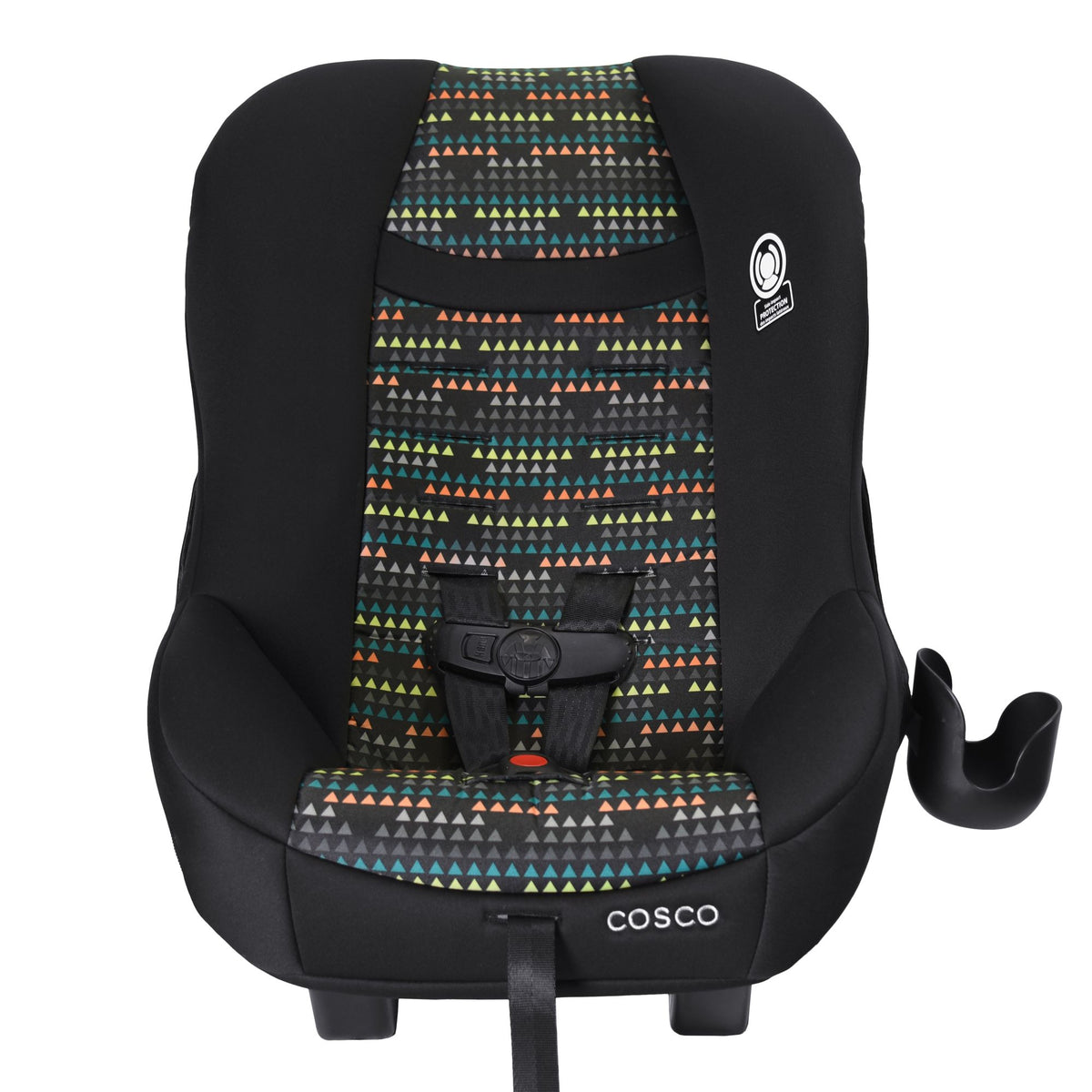
Dad Gear
Best car seat if you switch cars often
If you trade cars with a partner or use grandparents' cars, you need a lightweight seat with a simple install.
Read the story →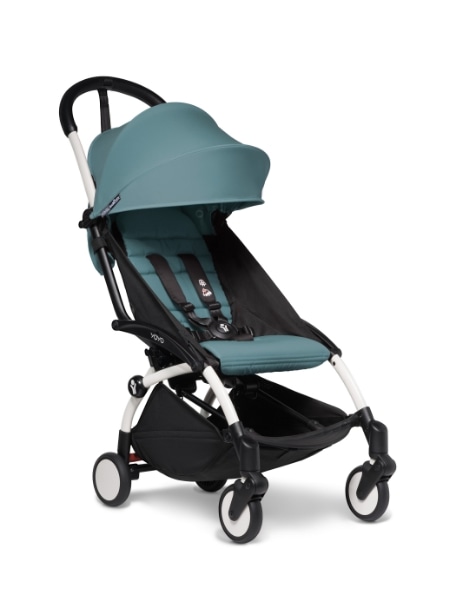
Travel
Best travel stroller for one-parent trips
A compact, easy-to-carry stroller makes family travel simpler. Cabin acceptance depends on the airline and aircraft.
Read the story →